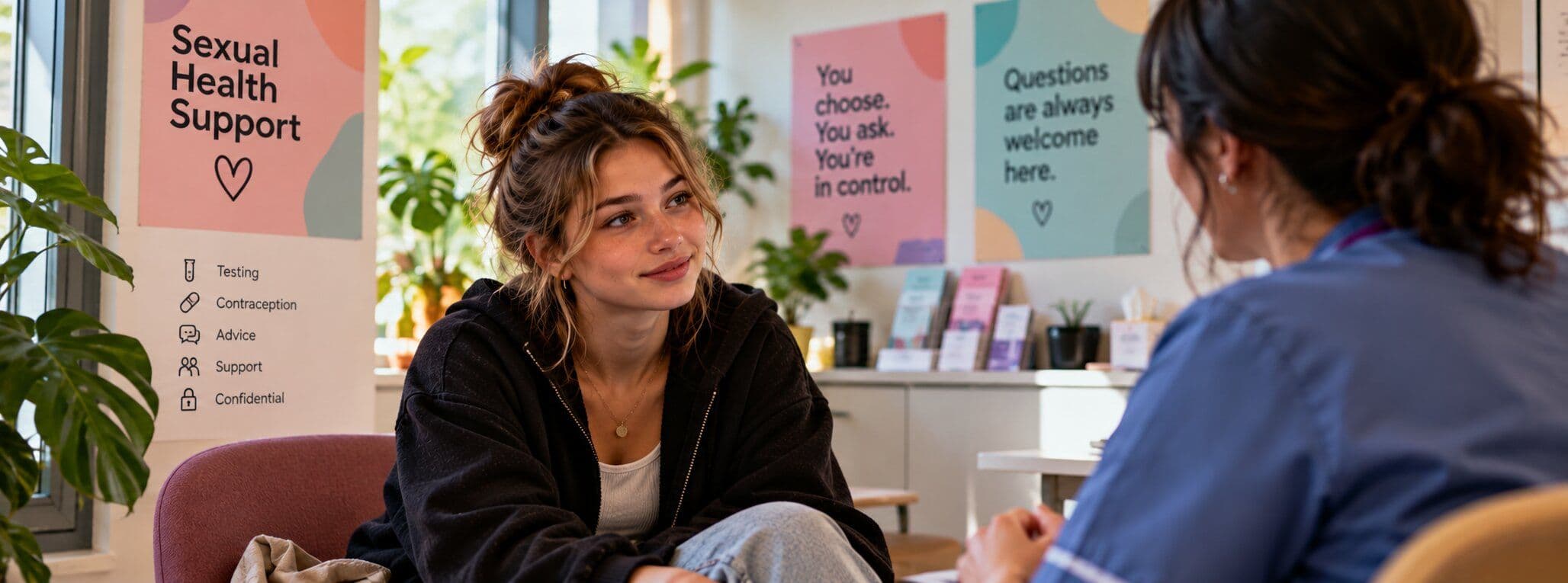

Sexual health can be one of those things that’s surprisingly difficult to talk about.
Maybe you’ve started seeing someone new.
Maybe you’ve had sex without a condom.
Maybe you’re worried about an STI.
Maybe you need contraception.
Maybe your contraception has failed.
Maybe you’re wondering whether something you’re experiencing is normal.
Or maybe you simply have a question that you’d rather ask someone who actually knows what they’re talking about.
Whatever the reason, you don’t have to figure it out alone.
There are free and confidential sexual-health services available to students across the UK.
And you don’t need to be embarrassed about using them.
Start with the NHS
If you’re in England, the NHS sexual health service finder is one of the easiest places to start.
Sexual-health clinics are free and available regardless of your age, gender, sexuality or ethnicity.
They can provide services including:
STI testing and treatment
HIV testing
contraception
emergency contraception
pregnancy testing
contraception advice
PrEP and PEP for HIV
HPV and hepatitis vaccinations
support following rape or sexual assault
Some clinics also provide additional services.
You don’t generally need to go through your GP to use a sexual-health clinic.
You can contact a service directly and ask what they offer.
Find an NHS sexual-health service
Use the NHS service finder to search for sexual-health clinics and services in your area.
Find an NHS sexual health clinic
Is it actually confidential?
Yes.
Sexual-health services are confidential.
In England, NHS guidance says staff at sexual-health clinics won’t tell other people what you’ve discussed without your permission, including your GP. There are exceptions where professionals believe there is a serious risk of harm to you or someone else, and they would normally discuss this with you first.
That means you can talk to a sexual-health professional about things such as:
your sex life
contraception
STI concerns
pregnancy
sexual partners
sexual orientation
sexual health worries
without automatically having the information passed on to your university or family.
What if I’m embarrassed?
Honestly?
The person sitting behind the desk has probably heard the question before.
Sexual-health professionals deal with these conversations every day.
You don’t need to impress them.
You don’t need to know the correct medical terminology.
You don’t even need to be completely sure what the problem is.
You can say:
“I’m not really sure what’s going on, but I’m worried about something related to my sexual health.”
That’s enough.
NHS guidance specifically notes that sexual-health clinic staff are used to dealing with these issues and are there to help rather than judge you.
What about my GP?
Your GP can also help with many sexual-health questions.
Depending on your circumstances, they may be able to provide:
contraception
contraceptive prescriptions
sexual-health advice
STI testing
pregnancy advice
referrals to specialist services
However, you don’t necessarily need to start with your GP.
For STI testing, specialist sexual-health clinics can often be a more direct route.
And some sexual-health services provide contraception and STI testing without requiring you to be registered with that particular service.
What about pharmacies?
Pharmacies can also be useful for some sexual-health needs.
Depending on the pharmacy and service available, you may be able to get:
emergency contraception
some forms of contraception
advice about sexual health
condoms
referrals or signposting to other services
In England, some pharmacies can provide contraception without you needing a prescription, and many can provide emergency contraception.
If you’re not sure whether your local pharmacy offers the service you’re looking for, it’s worth asking.
You can simply say:
“Do you provide contraception or sexual-health services?”
What about STI testing?
If you’re worried about an STI, you have several options.
You can contact a sexual-health clinic directly.
You may also be able to get testing through your GP, some pharmacies or an online/home-testing service, depending on where you live and what you’re being tested for.
Some people prefer going to a clinic.
Others would rather do the initial testing at home.
Neither choice is something to feel embarrassed about.
The important thing is getting appropriate advice and testing when you need it.
We’ll explain exactly what happens during STI testing in STI Testing: What Actually Happens?
What about home testing?
Home testing can be particularly convenient for students.
For example, SH:24 provides free online sexual-health services in partnership with the NHS in some areas. Depending on location and circumstances, it can provide STI testing, contraception information and sexual-health advice.
Home STI testing can involve different types of samples depending on what you’re being tested for, including urine, swabs or blood samples.
But availability varies.
A home-testing service isn’t necessarily available to everyone everywhere in the UK.
Always check the service’s current eligibility requirements and follow the instructions provided with your test.
What about Brook?
Brook is a specialist sexual-health charity with services across parts of the UK.
It provides a range of sexual-health services, including:
contraception
emergency contraception
condoms
STI testing and treatment
pregnancy testing
sexual-health advice
HIV support and PEP
sexual-assault support
some counselling and wellbeing services
The exact services available depend on the individual location. Some Brook services are specifically for people under 25, while others provide services to wider age groups.
You don’t necessarily need a referral to use Brook services.
Find Brook services
What if I’m under 25?
Being a student doesn’t automatically mean you’re entitled to a particular service simply because of your age.
However, there are services specifically designed for young people.
In England, NHS guidance includes dedicated young people’s sexual-health services, including free and confidential services for people aged 13 to 25 in some areas.
Brook also operates a number of services specifically for people under 25.
The important thing is to check what’s available where you live.
What if I don’t want to tell my GP?
That’s okay.
You can usually access specialist sexual-health services without going through your GP.
In England, sexual-health clinics are confidential and staff won’t normally share information with your GP without your permission.
If you’re worried about confidentiality, you can ask the service before making an appointment:
“Can I ask about your confidentiality policy before I book?”
They’ll be able to explain how your information is handled.
What if I need contraception?
There are several places you can get contraception, depending on the method you want and where you live.
These can include:
sexual-health clinics
GP surgeries
pharmacies
young people’s services
some specialist contraception services
In England, NHS contraception services are free and confidential, and some pharmacies can provide the contraceptive pill without a prescription.
Some longer-acting methods, such as implants and IUDs, require an appointment with an appropriately trained healthcare professional.
If you’re not sure which option is right for you, you don’t need to choose before asking for advice.
A healthcare professional can talk through the options with you.
What if I need emergency contraception?
If you’ve had sex without contraception or your contraception has failed, don’t panic.
There are emergency contraception options, and timing matters.
Depending on the method and your circumstances, emergency contraception can be available from:
sexual-health clinics
some pharmacies
GP services
other NHS services
In England, the NHS provides a dedicated service finder and information about obtaining emergency contraception.
If this has happened recently, it’s better to seek advice promptly rather than waiting to see what happens.
You can read more in Emergency Contraception: What Should I Do?
What if I’m worried about pregnancy?
You can speak to a GP, sexual-health clinic or appropriate pharmacy service.
Sexual-health clinics can provide pregnancy testing and advice, and some services can provide information and referrals relating to abortion if required.
You don’t need to have everything figured out before asking for help.
You can simply say:
“I think I might be pregnant and I don’t know what to do.”
A healthcare professional can explain your options.
What about PrEP and PEP?
If you’re concerned about HIV, there are medications that can reduce the risk of infection in particular circumstances.
PrEP is medication taken by people who do not have HIV to reduce their risk of acquiring HIV.
PEP is emergency medication that can be used after a potential exposure to HIV.
Sexual-health services can provide advice about whether these options may be appropriate for you.
If you think you may have been exposed to HIV recently, seek professional advice promptly because PEP needs to be started as soon as possible.
Don’t try to work out whether you’re eligible by yourself.
What if something happened without my consent?
Sexual-health services can also provide support following rape or sexual assault.
You can seek help even if you’re unsure about what happened or don’t know whether you want to report anything to the police.
Depending on where you live, support may be available through:
sexual-health services
Sexual Assault Referral Centres (SARCs)
specialist sexual-violence organisations
university support services
the NHS
You can read more in Something Happened and I’m Not Sure It Was OK.
If you’re in immediate danger, call 999.
What if I’m LGBTQ+?
Sexual-health services should be available regardless of your sexuality or gender.
NHS sexual-health services in England state that they are available to everyone regardless of age, gender, ethnicity or sexuality.
Some services also offer specialist support for particular communities.
If you’re looking for a service that understands your specific circumstances, you can ask when booking whether they have relevant specialist provision.
You don’t have to explain or justify your identity to deserve respectful healthcare.
What if I’m an international student?
You can still seek sexual-health advice.
However, access to some NHS services can depend on the type of service and your circumstances.
If you’re unsure about whether you’re eligible for a particular service, don’t assume that you can’t access it.
Ask.
Your university’s international student team may also be able to help you understand how healthcare works where you are studying.
What if I’m studying outside England?
The NHS is structured differently across the UK.
Scotland
NHS Scotland provides free sexual-health services through local health boards, including contraception, STI testing and treatment, HIV prevention and other services. Availability can vary between areas.
Wales
NHS Wales provides free and confidential sexual-health services through sexual-health clinics and other providers. Services can include STI testing and treatment, contraception, pregnancy testing and emergency contraception.
NHS 111 Wales — Sexual health clinics
Northern Ireland
Sexual-health services are provided through Health and Social Care (HSC) Trusts. STI testing is available through GUM clinics and some GP surgeries, and services are free and confidential.
What if I don’t know what service I need?
This is probably one of the most important things to remember:
You don’t need to diagnose yourself before asking for help.
You can tell a sexual-health service:
“I’m not sure what I need.”
They can ask you some questions and explain what options are available.
Brook makes the same point for its services: if you’re unsure what help you need, getting in touch is a reasonable first step and its team can help direct you to the appropriate service.
You don’t need to arrive with a diagnosis.
You just need to start the conversation.
A quick guide
If you’re worried about…
A good place to start
STI
Sexual-health clinic or appropriate home-testing service
Contraception
Sexual-health clinic, GP or pharmacy
Emergency contraception
Pharmacy, sexual-health clinic or GP/NHS service
Pregnancy
GP, sexual-health clinic or pregnancy service
HIV / PrEP / PEP
Sexual-health clinic
Sexual assault
Sexual-health service, SARC or specialist organisation
General sexual-health question
Sexual-health clinic, Brook or NHS
Something you’re unsure about
Sexual-health service — explain that you’re not sure what you need
Services vary by location, so always check the current service information before travelling to a clinic.
You really don’t need to be embarrassed
There’s a strange idea that needing sexual-health advice means you’ve done something wrong.
It doesn’t.
Looking after your sexual health is simply part of looking after yourself.
You don’t have to be having lots of sex.
You don’t have to be in a relationship.
You don’t have to be worried about an STI.
You don’t have to know exactly what question you want to ask.
You can go because you have a question.
That’s what these services are there for.
Useful places to start
NHS — Sexual health services
Find sexual-health clinics, STI testing, contraception and other services in England.
Brook
Sexual-health services and information, with many services aimed at young people.
SH:24
Online sexual-health information and services, including free STI testing in areas where the service is available through the NHS.
NHS inform — Scotland
Sexual-health information and local services for people in Scotland.
NHS 111 Wales
Sexual-health services and clinic information for Wales.
NHS 111 Wales Sexual Health Clinics
nidirect — Northern Ireland
Sexual-health information and local HSC services.
Read next
STI Testing: What Actually Happens?
Not sure what happens when you go for an STI test? Here’s what you can expect.
Contraception: Where Do I Start?
A straightforward introduction to the different options and where to get advice.
Emergency Contraception: What Should I Do?
What to do if contraception fails or you’ve had sex without contraception.
Talking to a New Partner About Sexual Health
How to have the conversation without making it weird or accusatory.
This article provides general information about accessing sexual-health services in the UK. Services, eligibility, opening hours and available treatments can vary by location and can change over time. Always check the current information with the relevant NHS service or healthcare provider.